
How to choose a shamanic drum
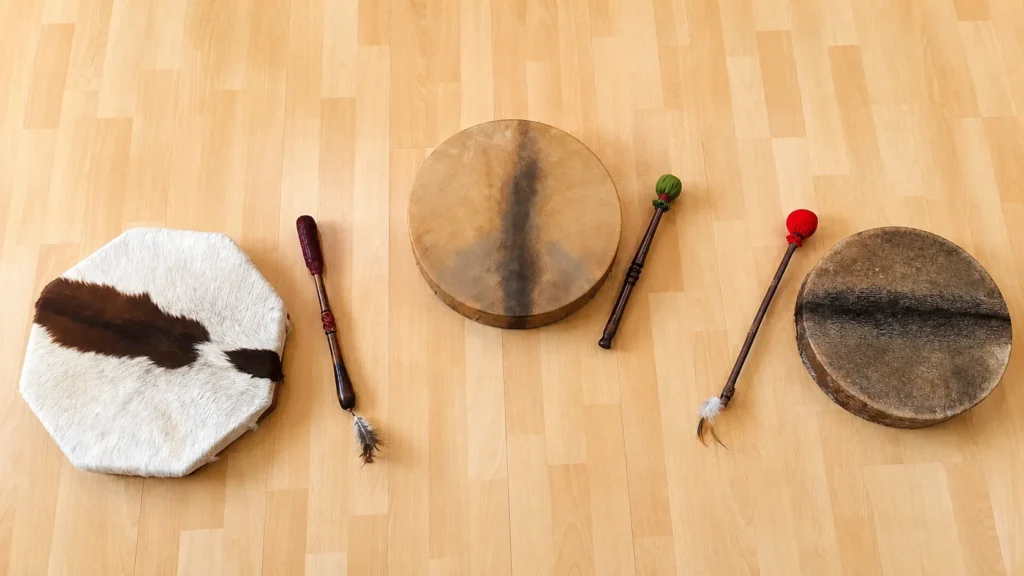
Choosing a drum is not just choosing an object. It is choosing a companion for the road: something that will be with you in your ceremonies, your travels, your moments of silence or your gatherings with others. Choosing the size and type of hide can sometimes be tricky, so before looking for the right drum for you, it is worth stopping to think about how you are going to use it.
In short: to choose a shamanic drum, start with how you will use it (for everything, for travelling, for sound baths or for the temazcal), and then look at the size of the frame, the type and thickness of the hide, the shape and the way it is laced. If it is your first drum or you want a versatile one, we usually recommend a medium drum (35 to 45 cm) in goat or buffalo hide of medium thickness.
How you will use it
From our experience, the most common uses fall into these categories:
“Standard” drum: Most people who want a drum do not give it just one specific use. They use it in many different situations: playing for themselves, playing in nature, playing with others in drum groups, songs, ceremonies, relaxing or therapeutic settings and so on. They are looking for a reliable, versatile companion they can take anywhere and that works well in many different situations. In these cases we usually recommend medium-sized drums made with goat or buffalo hide, as we find them a good balance between a manageable size, which makes them easy to carry, a moderate weight, which reduces fatigue when playing for a long time, and a balanced sound with enough depth and power for most situations.
Travel drum: For people who like to take their drum everywhere, weight and size become the most important things. It needs to fit easily in a bag or backpack so you can take it on all kinds of trips, including flights. That is why we usually recommend small drums in goat hide of medium thickness, putting portability first without giving up a good sound.
Drum for sound baths or sound therapy: Here the drum is no longer played for yourself; it becomes a source of sound designed for other people to lie down, close their eyes and let go. You want a sound rich in harmonics, that lasts and fills the space. Size matters here, as larger diameters tend to move more air and maximise the vibration the drum transmits when its sound is projected onto a person’s body. What is known today about that vibration, and what is not, we go through in our article on the possible benefits of the shamanic drum.
Drum for the temazcal: In our experience, no drum made with natural hide can withstand the conditions inside the temazcal indefinitely without its sound being affected. This is due to the “extreme” heat and humidity: hide is an organic material, so it absorbs moisture and eventually loosens. So for this kind of drum we try to slow the loosening down as much as possible, using the thickest hides we can, laced as tightly as possible over a medium-small frame. This gives us drums that usually hold up well for several doors without being taken out to dry by the fire, but at some point they will inevitably need to go near the fire to dry so they can be played again. In addition, the continuous cycles of tightening and loosening tend to reduce the drum’s tension over time, so it is normal for the drum to stay tight for a shorter time inside the temazcal each time. That is why it is sometimes a good idea to have a specific drum for the temazcal, one we know will be put through very demanding use and will need to be remade in time. Another valid option is a drum made of synthetic material that does not change with humidity. We will go into this in more detail in a future article about drums in the temazcal.
Once we are clear about how we are going to use it, we can start thinking about the sound we want. For that, it is important to understand the factors that affect the pitch and timbre of a drum.
Tension, thickness and size
The pitch of a drum does not depend on a single factor: it depends on how the tension of the hide, its thickness and the diameter of the frame combine. The more tension we give the hide, the higher it sounds. But at the same tension, a thicker hide (more mass per square centimetre) always sounds lower than a thin one, and a larger frame also sounds lower than a small one. Thickness and size do not act only through tension: they directly influence how the hide vibrates.
That is why at Alpa Kamaska we always think about the three factors together when building each drum. Tightening more or less is not enough: the hide and the size we choose determine, from the very start, what pitch is possible.
Type of hide
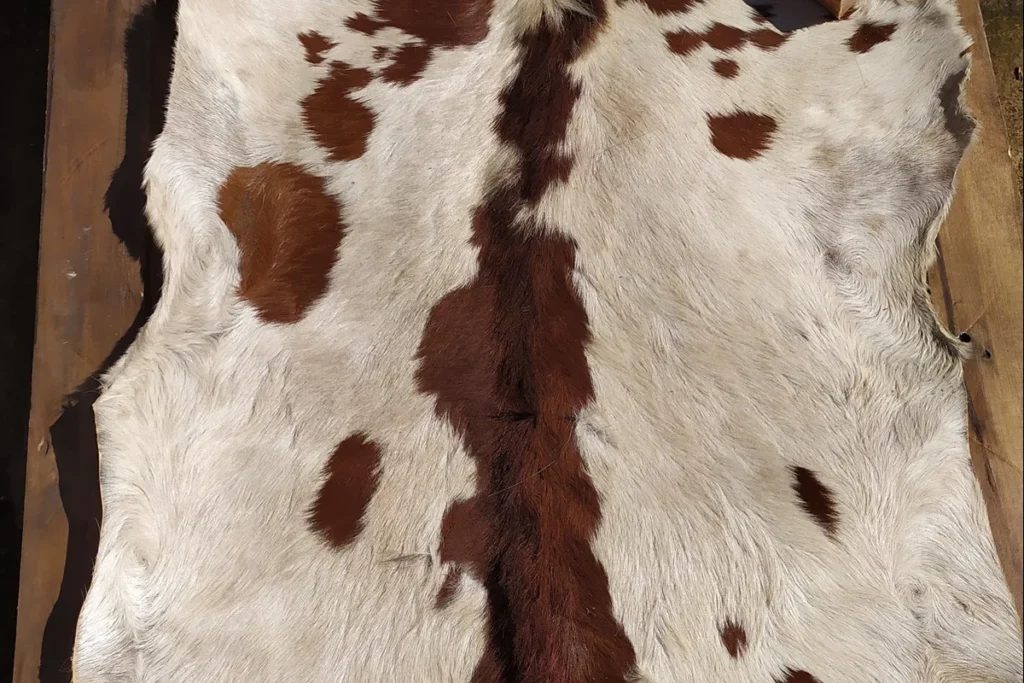
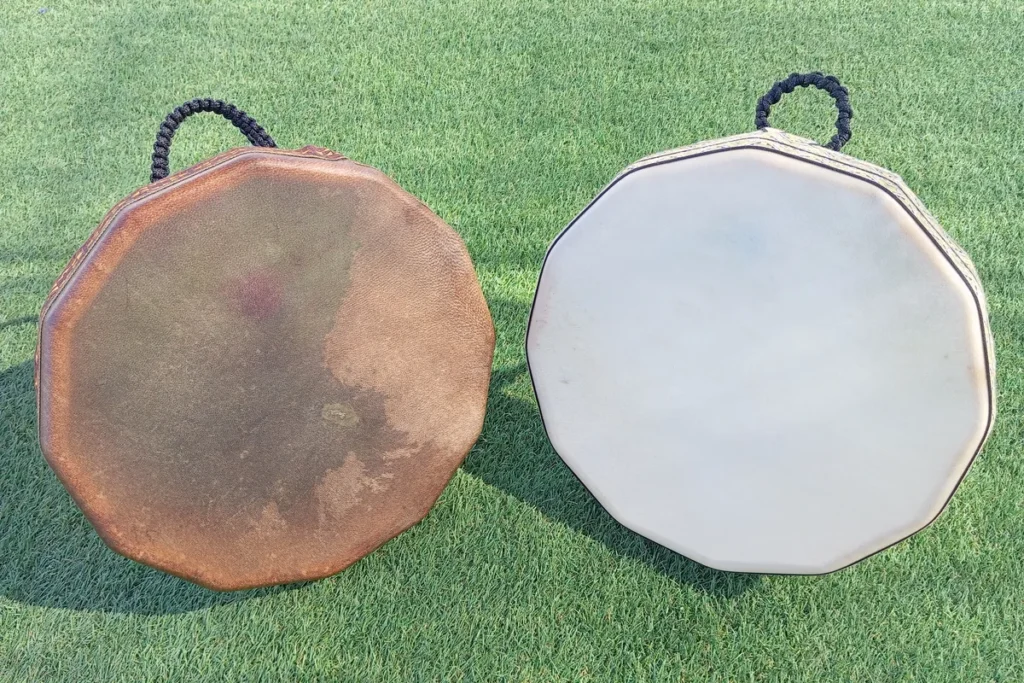
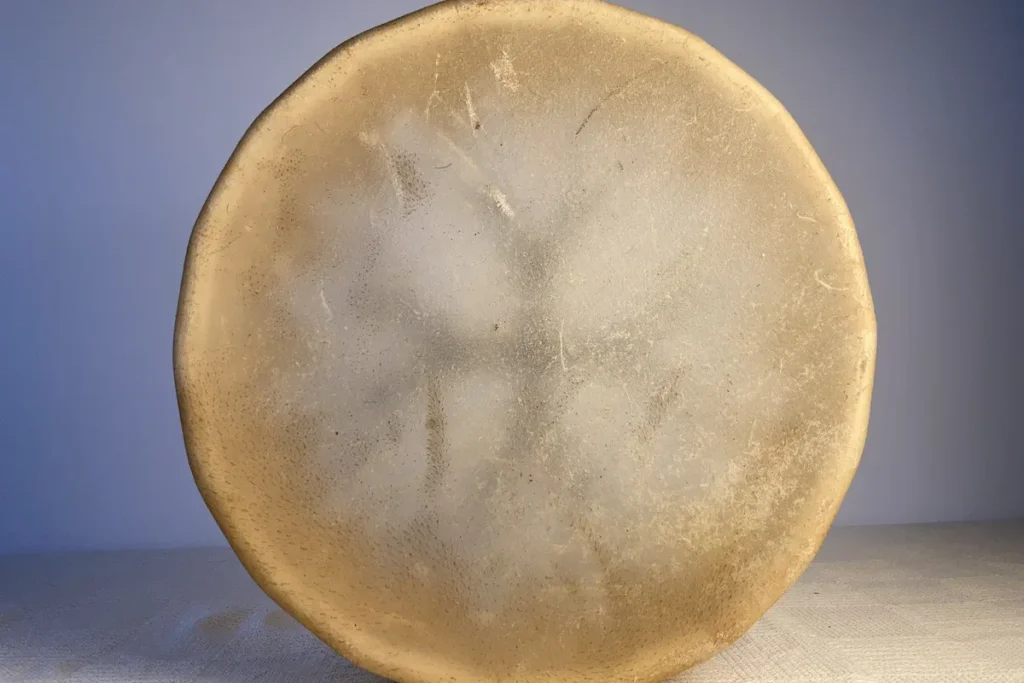
There are many hides suitable for making drums, and each one tends to produce its own timbre or “colour”. Even within the same species, no two hides are the same, since it is a 100% organic material and can vary a lot in thickness, evenness, appearance and so on. At Alpa Kamaska we mainly work with different types of goat and buffalo hide, choosing each piece according to the kind of drum we want to make. Some of the hide-related factors to keep in mind are:
Thickness:
Thick: Generally gives a deeper, more contained sound and tends to cope better with heavy use. In return, it responds a little more slowly to the touch.
Medium: The balance point between body and projection: it combines good response with a well-defined sound. It is the option we most often recommend for a versatile drum.
Thin: Responds faster and more sensitively, giving higher, brighter sounds. It is more delicate, so it needs more care against knocks or sudden changes in humidity.
Animal of origin:
As we saw in the previous section, the type of hide does not only influence pitch. It also shapes the timbre: the characteristic “colour” of each drum’s sound. Each animal has a hide with a different structure of collagen fibres, more or less dense and compact, and that makes it vibrate and dampen differently, beyond its thickness or tension. With experience you can hear this: people who have played or built several drums can usually tell whether a drum “sounds like goat” or “sounds like buffalo” without even looking at the hide.
Goat: One of the most widely used hides for shamanic drums. It tends to bring out the highs and the harmonics. Goat hide comes in different thicknesses, which give the drum its character. It can also be worked with the hair on. The hair acts as a natural filter for high frequencies and balances the drum’s tone, but it also takes away a little vibration. In general, the hair “rounds off” the sound of the drum a little and gives it some more depth.
Buffalo: Generally a thicker, tougher hide, although it can also be found thin. It usually produces a sound we could describe as “round”. It copes well with heavy use, although it tends to respond a little less quickly than goat hide. It is usually harder to work with, something to bear in mind if you are going to make the drum yourself or in one of our workshops.
Another thing to consider is how the hide looks. Buffalo drums usually have a translucent hide with a yellowish tone. Although there can be variations, buffalo drums generally look more uniform. Goat drums, on the other hand, can vary more from one to another, as goat hide can show different patterns of spots or stripes, giving each drum a unique look.
As we said, there are many hides suitable for making a drum: cow, horse, deer, camel and so on, as well as synthetic membranes. Although we have occasionally experimented with these, with good results, we focus on goat and buffalo hides, which we find versatile enough and available for most of the activities we do. That is why we do not go into the other hides in this article.
Frame size
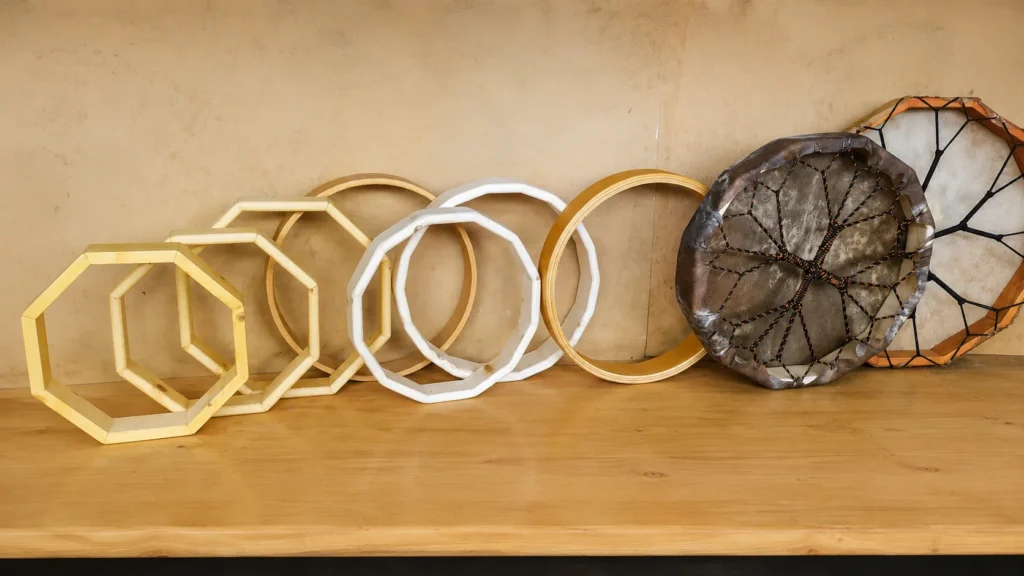
Small (<35 cm): Smaller diameters, designed for travelling or for more personal use. They are light and easy to hold for long periods.
Medium (35 cm – 45 cm): The most balanced size, both for playing alone and for joining drum groups. It is the one we usually recommend as a first drum or as a “Standard” drum.
Large (45 cm – 60 cm): More projection and sound presence, designed for large spaces, drum circles or sound baths, where you want the sound to fill the room. It becomes less manageable as the size increases, and holding it for a long time can be more tiring. So it is important to think carefully about how you will use it before choosing a size in this range.
Very large (60 cm – 70 cm): Reserved for very specific uses where you want to project the vibration. When a drum of this size is played close to you, you feel your whole body vibrate. It is a wonderful experience for the person receiving it, but harder to handle for the person holding the drum.
Shape:
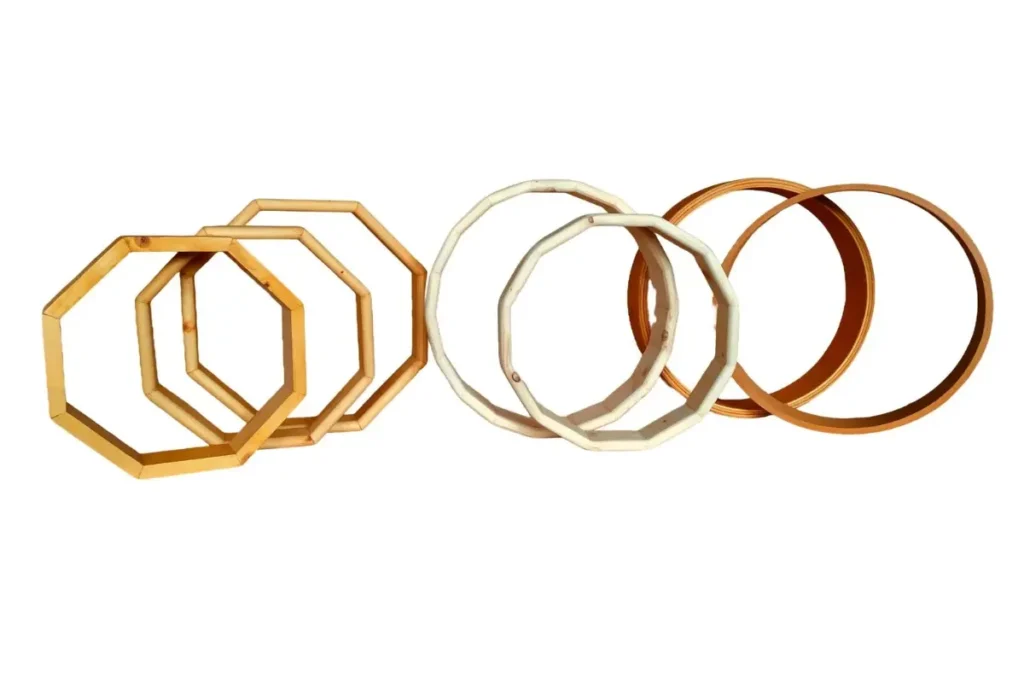
Round: The most traditional shape and the most common for shamanic drums. The circular hoop spreads the tension of the hide evenly around the edge, which helps give a more even sound. At Alpa Kamaska we make round hoops from plywood, but we usually use solid fir wood in an 18-sided polygon (this can vary with size). This gives a polygonal hoop that we then sand and “round off”, achieving a final shape and behaviour similar to a round one, but built as a polygon with many sides.
Polygonal: A hoop with several straight sides (hexagonal, octagonal…) instead of a curve. It changes the look of the drum and, to some extent, its acoustic behaviour. Although it is a less common construction, it has a look and symbolism that many people like, and it does not behave very differently, at least from a practical and sound point of view.
How it is laced:

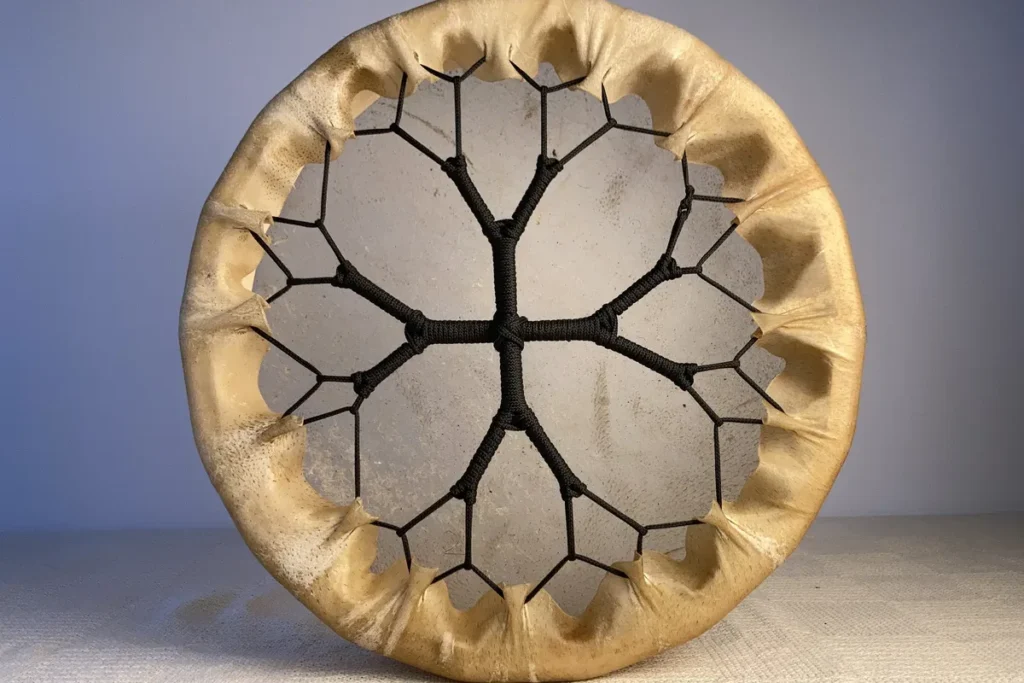
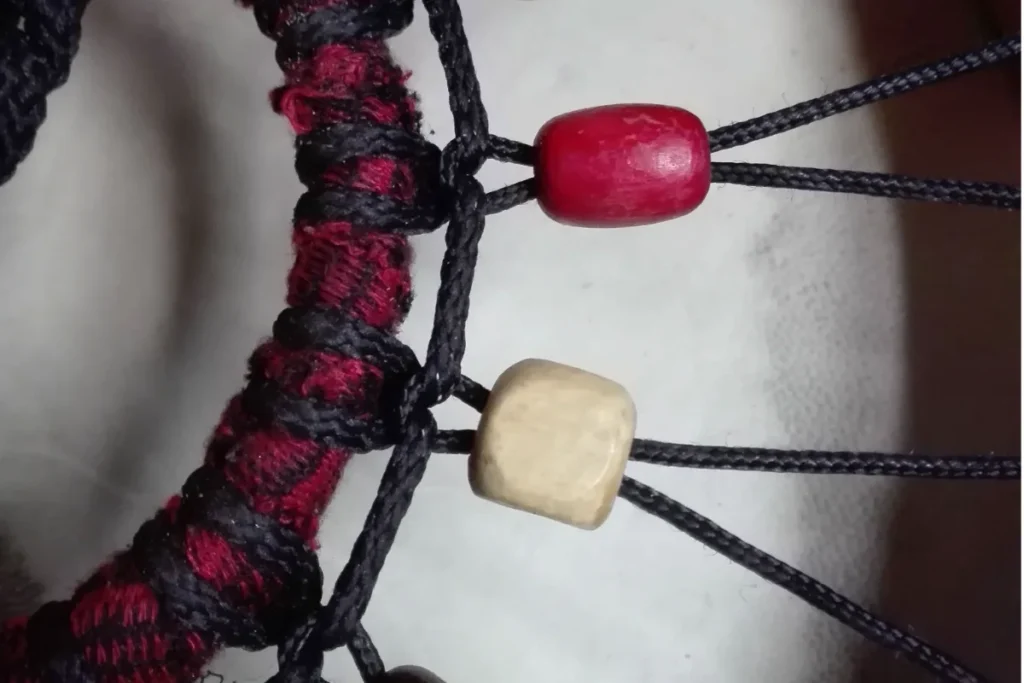
Laced: The most traditional method: the hide is stretched wet over the hoop and laced from side to side across the back of the drum, in one of two ways. Either with a thong, usually cut from the same hide used for the drum head (the more traditional method), or with rope.
With tensioners: The hide is mounted over a metal ring on which the lacing is done, adding pieces of wood or leather that can slide along the rope to tighten it. It is more complex to make and adds some weight, but it lets you increase or decrease the tension of the hide and so adjust the drum’s pitch a little.
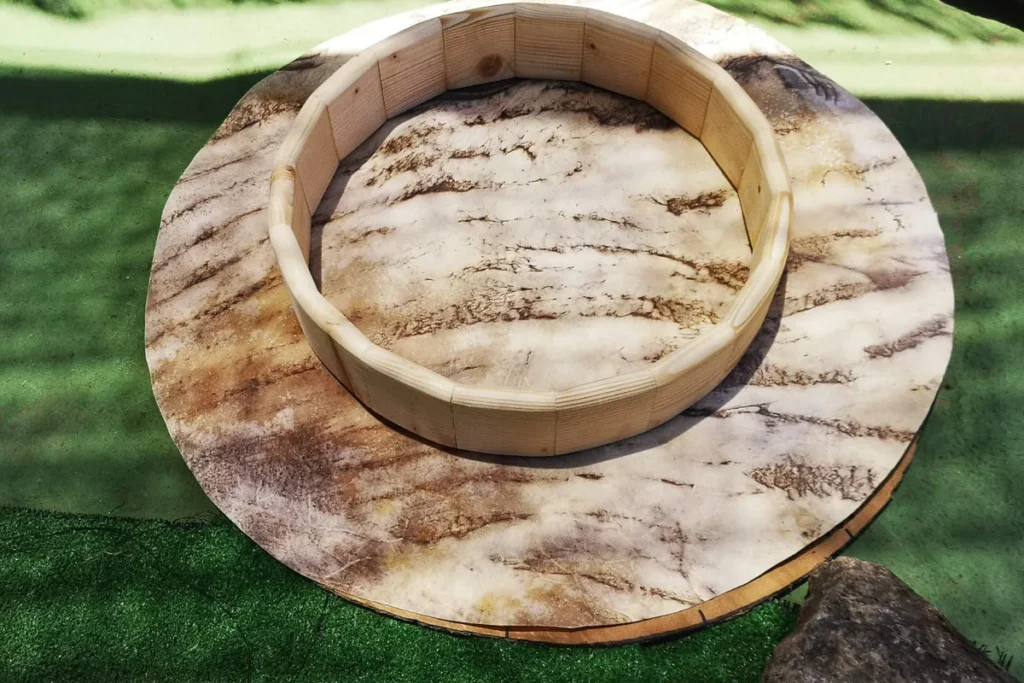
With an inner tube: Essentially a rope-laced drum, with the difference that we also place an inner tube between the outer face of the hoop and the hide, with its inflation valve passing through the frame to the inside. You can pump in air with a bicycle-type pump, which subtly increases the drum’s effective diameter and tightens the hide. We usually use it on large or very large drums, which are more sensitive to changes in tension and harder to tighten evenly with rope alone. The inner tube spreads the pressure around the whole rim and lets you readjust later without undoing the lacing.
In short:
None of these factors are independent of one another: the type of hide, the size, the shape and the lacing you choose together determine how the drum’s tension behaves, that is, how it sounds and how it responds to your touch. So rather than looking for the best drum, we invite you to look for yours: the one that suits how you will use it and the path you want to walk with it.
Frequently asked questions about how to choose a shamanic drum
What size of shamanic drum is best to start with?
A medium drum, 35 to 45 cm in diameter. It is the most balanced size, both for playing alone and in drum groups, and the one we usually recommend as a first drum or as a versatile drum.
Is a goat hide or buffalo hide drum better?
It depends on the sound and the use you are looking for. Goat hide tends to bring out the highs and harmonics, and each hide has different spots or stripes. Buffalo hide is usually thicker and tougher, gives a rounder sound and copes well with heavy use, although it responds a little less quickly to the touch.
Which shamanic drum is best for travelling?
A small drum, under 35 cm, in goat hide of medium thickness. It is light, fits easily in a bag or backpack and can go with you on all kinds of trips, including flights.
Which drum is best for sound baths?
A large or very large one, from 45 to 70 cm. Larger diameters move more air and transmit more vibration to the body of the person receiving it. In return, they are harder to hold and handle for a long time.
Can you play a hide drum inside the temazcal?
Yes, but no natural hide drum can withstand the heat and humidity of the temazcal indefinitely: the hide absorbs moisture and loosens. Thick, tightly laced hides over a medium or small frame work best, and even then, at some point you will need to dry it by the fire. That is why it is sometimes worth having a specific drum for the temazcal, or one made of synthetic material.
What is the difference between a laced drum, one with tensioners and one with an inner tube?
Lacing is the most traditional method: the hide is stretched wet and laced across the back with a hide thong or rope. With tensioners, pieces that slide along the rope let you raise or lower the tension. With an inner tube, an air chamber between the hoop and the hide is inflated with a bicycle-type pump to tighten the hide; we use it mainly on large or very large drums.
Not sure which drum is right for you? At Alpa Kamaska we make handmade drums, one by one, and we also take custom orders. Write to us and we will help you find yours.
